

Gymnastics guide
Youth gymnastics equipment checklist
One of the nice things about starting gymnastics is that the gym provides the big equipment. Families mostly need to supply comfortable clothing and a few basics. Here is a simple checklist and some tips for choosing well.
What the gym provides
Mats, springboards, bars, beams, rings and the other apparatus belong to the gym, and so does the spotting and safety equipment coaches use, such as soft landing surfaces. You do not need to buy any of it. If a coach asks you for something specific, ask whether the gym has a recommended type.
Clothing basics
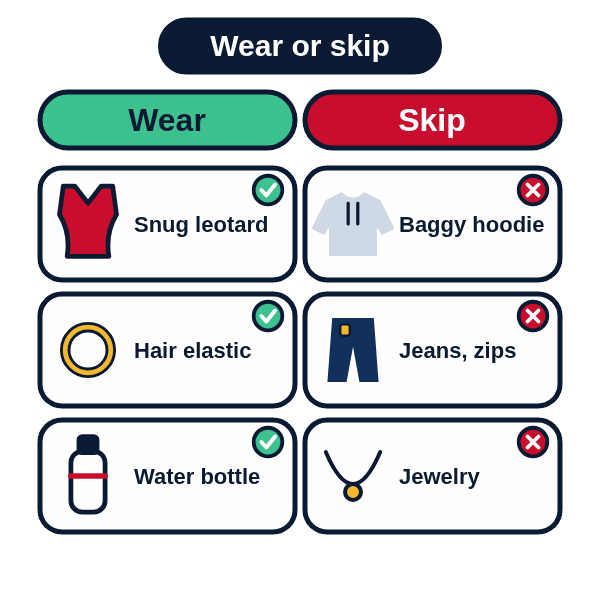
- Girls: a leotard or snug-fitting athletic top and shorts. Clothing should stay in place when your child flips, hangs upside down or stretches.
- Boys: fitted shorts and a fitted top or tank, according to what the gym asks for. Some programs also use long gymnastic pants for certain events.
- What to avoid: baggy shirts, jeans, zippers, big buttons, hooded tops and anything with drawstrings. Loose clothing can get caught or block the coach's view of body position.
Many gyms have their own team or class leotard. Wait to buy one until you know what is required. For competition, teams usually have a uniform, and your coach or team will tell you how to order it.
Feet
Gymnastics is usually done barefoot, or with thin gymnastic shoes or beam socks for certain events and programs. Regular sneakers are not meant for the mat. Ask the gym what its policy is. If you need to bring something for walking between areas, a pair of sandals or slides is handy.
Hair, jewelry and nails
- Pull hair back securely with elastics that have no metal parts. Hair that falls over a gymnast's face can be a distraction and a hazard when she or he is upside down.
- Remove jewelry before class, including earrings, necklaces, bracelets and watches, unless the gym says a small item is allowed. Check with the gym.
- Keep fingernails short and smooth so they do not catch or snag.
Extras you may hear about
- Grips
- Leather or similar hand guards used on bars, rings and horizontal bar to protect the palms and help with the swing. They are usually introduced when a gymnast starts the events that call for them. Your coach will tell you when and what type, and how to fit them.
- Wrist supports
- Some gymnasts wear wrist support during training. Ask a coach or doctor before buying one, and do not use support to push through pain.
- Chalk
- Used to keep hands dry. Gyms supply it, and you generally do not need your own.
- Water bottle and snack
- Bring a labeled water bottle and, for long classes, a small healthy snack. Check with the gym about food rules.
- Bag
- A simple bag keeps shoes, hair ties and any items in one place so nothing gets left behind.
Fit and safety tips
- Choose clothing that fits snugly but is comfortable. If a gymnast keeps tugging at a leotard, it distracts from learning.
- Label everything with your child's name.
- Try on grips with a coach's help so they are not too loose or too tight.
- Do not buy home equipment such as a balance beam or bars without talking to a coach first, and never let children practice new skills at home unsupervised.
- If something is uncomfortable, painful or irritating, tell the coach. Ask a doctor about any physical concerns.
Growing kids and changing gear
Children grow quickly, and gymnastics clothing is meant to fit closely. Before buying several of anything, wait until you know what the gym requires and consider whether a hand-me-down or a secondhand item from the team would work. Check leotards and grips for wear, such as thin spots, torn seams or frayed leather, and replace them if they no longer do their job. Wash clothing and grips according to the instructions, since sweat and chalk build up quickly. Ask your coach or the team parent group where families usually find uniforms and what to expect from season to season.
Before you shop
Gyms vary, and so do their rules. Ask what is required for your child's class before buying anything. Once you know the basics, learn how meets work in gymnastics meets and scoring for beginners and plan ahead with how to prepare for gymnastics season. You can find everything else on the gymnastics hub.
What you can usually skip
New families sometimes buy more than they need. Before spending money, hold off on anything a coach has not asked for. That often includes expensive branded practice wear, home apparatus, extra grips in several styles and large bags of gear. A few comfortable, well-fitting outfits and a water bottle go a long way in the first season. If your child stays with the sport, you will have a much better idea of what is worth buying.
A simple shopping order
- Ask the gym for its dress code and any required class or team items.
- Buy one or two snug, comfortable outfits for class.
- Pack hair elastics without metal parts, a labeled water bottle and a simple bag.
- Wait for the coach before buying grips, wrist supports, gymnastic shoes or a competition uniform.
- Look into secondhand options through the gym or team parent group.
Caring for gear
Follow the care instructions on tags, and let items dry fully between uses. Check regularly for wear, such as thin fabric, loose seams, frayed edges or hard, cracked leather on grips. Worn gear can irritate skin or fail when it matters, so replace it or ask your coach. Keep gear in a bag that lets air circulate. If a rash, blister or other skin problem keeps coming back, ask a doctor, and let the coach know.
For the next step, see how to choose a gymnastics gym if you are still deciding, or the first-year guide for parents for what the first months usually look like.
In BlackForge Sports: one app for every sport your family plays, with live scores, highlights that make themselves and parent-controlled profiles. Get early access and tell us you’re here for gymnastics. Get early access →
Sources and further reading
- Gymnastics: Keeping the Sport Safe & Fun for Kids HealthyChildren.org (American Academy of Pediatrics)
- Gymnastics Safety Tips KidsHealth (Nemours)
- For parents: Safety Tips: Gymnastics KidsHealth (Akron Children's)
Links open in a new tab. Quotations are short excerpts, included with attribution for commentary. BlackForge Sports is not affiliated with or endorsed by the people or organizations named.
Frequently asked questions
Do beginners need to buy gymnastics equipment?
Usually not. The gym supplies the apparatus and safety equipment, and families mostly provide clothing and a water bottle.
What should a young gymnast wear to class?
Snug, comfortable athletic clothing such as a leotard or fitted top and shorts. Avoid loose clothes, zippers and drawstrings, and ask the gym about its dress code.
When does a gymnast need grips?
Grips are generally introduced for events like bars, rings and horizontal bar. Your coach will tell you when your child is ready and what to buy.
Should we buy a beam or bars for home?
Talk to your coach first. Skills should be practiced with proper supervision and safe surfaces, so home equipment is not a substitute for gym training.
Can we buy secondhand gymnastics clothing?
Often yes, especially for growing children, as long as the item fits well and is in good shape. Ask your gym or team parent group where families trade or pass along items.
Do I need special shoes for gymnastics?
Many classes are barefoot, and some programs use thin gymnastic shoes or beam socks for certain events. Ask the gym, since policies differ.