

Football guide
Youth football equipment checklist
Football has more required gear than most youth sports, and getting it right matters for comfort and safety. This checklist explains what a beginner typically needs, how to check fit and what to ask your league before you buy anything.
Start with your league
Many leagues rent or issue helmets and shoulder pads, and some provide full uniforms. Others expect families to buy certain items. Before you spend money, ask your league what is provided, what you must bring and whether any gear must meet a specific standard. Rules and requirements vary by league and age group.
Tackle football gear checklist
| Item | What to know |
|---|---|
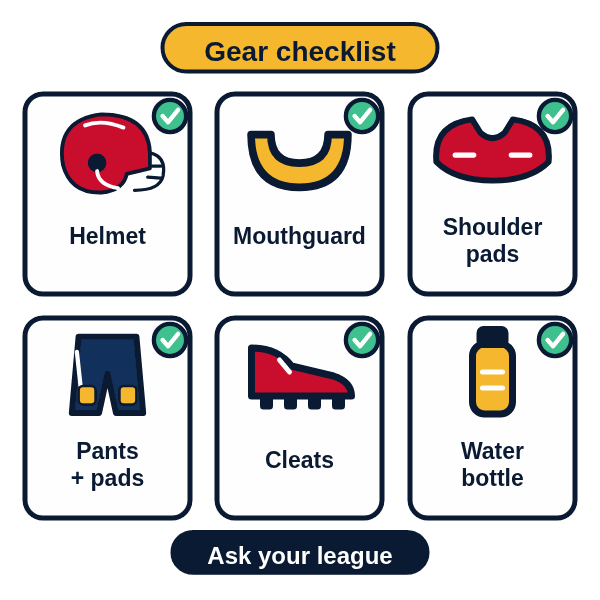
| Helmet with face mask and chin strap | The most important piece of gear. It must fit properly and be in good condition. Leagues often supply these, and many require them to be inspected or reconditioned on a schedule. Look for a certification label (in the US, NOCSAE) and follow the manufacturer's and league's guidance on age and condition. |
| Mouthguard | Required or strongly recommended in most leagues. Some players use a boil-and-bite style, and others get a custom one from a dentist. Bring a case. |
| Shoulder pads | Sized to the player's chest and shoulders. They should cover the shoulders without limiting arm movement. |
| Hip, thigh and knee pads | Often built into the pants or slid into pockets in the pants. Check that every pad is in place and sits where it should. |
| Football pants | Snug but not restrictive, with pockets for pads. |
| Protective cup or supporter | Recommended or required in many leagues. Ask your league. |
| Cleats | Football cleats or other cleats allowed by your league, with room for the toes and a secure fit around the ankle. |
| Socks and base layers | Moisture-wicking layers are comfortable and help reduce chafing under pads. |
| Gloves (optional) | Often used by receivers and some linemen. Not required in most leagues. |
| Water bottle | Labeled with your child's name. Hydration matters at every practice. |
Checking the fit
A trained coach, equipment manager or fitter should check helmet and pad fit, since a poor fit can reduce protection. A few general things to look for:
- Helmet: snug all around, with no sliding when your child shakes their head. The chin strap should be buckled and secure, and the face mask should not touch the face.
- Shoulder pads: comfortable, with the pads centered over the shoulders and no pinching.
- Other pads: should stay in place during running and cover the intended area.
- Cleats: room to wiggle toes but no heel slipping. Kids outgrow cleats fast, so check them each season.
Never let a child wear a helmet that is cracked, loose or that was not fitted properly. If the helmet has been damaged or is past its recommended service life, ask the league about replacing it.
Gear care and safety habits
- Teach your child to put gear on correctly and to tell a coach if anything feels wrong.
- Air out pads and uniforms after every practice so they do not stay damp, and wash what can be washed.
- Do not alter or remove padding from equipment.
- Label everything with your child's name or number, especially with shared team gear.
- Keep gear out of hot cars, which can damage helmets and padding.
Flag football gear
Flag football needs much less. Players usually wear a flag belt with flags, a jersey that stays tucked or is short enough not to hide the flags, athletic shorts without pockets (pockets can interfere with flags in many leagues) and cleats or sneakers allowed by the league. Many leagues also require or recommend a mouthguard. Ask your league what is allowed.
Plan for growth and wear
Young players grow quickly, so fit that was right last season may not be right now. Check gear before each season, and replace anything that is worn, cracked or too small. Pads that have lost their cushioning or straps that no longer hold are worth replacing, and a league official or equipment manager can tell you what needs attention. Buy only what you need until you know what your league supplies.
Before the first practice
Make sure your child has tried on the gear at home and knows how to carry it. Our football season preparation guide covers first practices, and football terms for new parents explains equipment words such as pads, cleats and cup.
If you have questions about whether your child is ready for contact or whether gear is right for a specific health concern, ask your coach or your child's doctor.
Questions to ask your league about gear
- Which items are provided, which are rented and which must I buy?
- Is there a fitting day, and who checks helmets and pads?
- How are helmets inspected or reconditioned, and how often?
- Are there rules for cleats, gloves, undershirts or colors?
- What happens if my child outgrows an item mid-season?
Common gear mistakes
- Buying before asking. Many families purchase items the league already supplies.
- Buying big to grow into. Protective gear that is too large can shift and protect less. Cleats are the main exception where a little growing room is reasonable.
- Skipping the fitting. Even good gear works only if it is sized and adjusted correctly.
- Forgetting small items. The mouthguard and water bottle are the things most often left at home.
Practice bag checklist
- Helmet and shoulder pads (if your child takes them home).
- Pants with pads in place, plus a protective cup or supporter if required.
- Mouthguard in its case.
- Cleats, socks and a base layer.
- Labeled water bottle and any medicine the coach knows about.
- A towel and a change of clothes.
Buying, borrowing and sharing gear
Many programs have hand-me-down or shared equipment, and swapping with other families can save money. The safest approach is to treat helmets and pads differently from soft items. Cleats, pants, socks and base layers are easy to judge by eye. Helmets and shoulder pads should be checked by a coach or league equipment manager for condition, age and fit, and your league may have rules about used helmets. When in doubt, ask before you buy or accept anything.
It is also worth keeping a small checklist on the fridge so the bag is repacked after every wash. Kids who pack their own bag, with a parent checking it, learn responsibility and are less likely to arrive without a mouthguard.
In BlackForge Sports: one app for every sport your family plays, with live scores, highlights that make themselves and parent-controlled profiles. Get early access and tell us you’re here for football. Get early access →
Sources and further reading
- What parents need to know about football helmets USA Football
- NOCSAE Youth Football Helmet Standard NOCSAE
- Football: Have Fun, But Play Safe HealthyChildren.org (AAP)
Links open in a new tab. Quotations are short excerpts, included with attribution for commentary. BlackForge Sports is not affiliated with or endorsed by the people or organizations named.
Frequently asked questions
Do I need to buy a helmet for youth football?
Not always. Many leagues provide helmets and shoulder pads, so ask your league before you buy.
What gear does a child need for flag football?
Usually a flag belt, athletic clothing, cleats or sneakers and often a mouthguard. Ask your league for its list.
How do I know if a helmet fits?
It should be snug without sliding, with a secure chin strap and a face mask that does not touch the face. Ask a coach or trained fitter to check it.
Should I buy used football gear?
Used gear can be fine for items like cleats and pants, but have a coach or league official check helmets and pads for condition and fit.
What is NOCSAE?
In the United States, NOCSAE is the organization whose standards football helmets are commonly certified to, and its label is what leagues look for. Ask your league what it requires for your child's age and division.