

Cross country guide
How to prepare for cross country season
A good cross country season starts before the first meet. These steps help new runners build a gentle base, arrive ready to practice and enjoy race day. For anything health related, check with your coach or doctor.
“To give anything less than your best is to sacrifice the gift.”
Before the season
Many teams begin with summer or preseason running. If your child is new, the goal is simple: get used to running regularly at an easy pace, not to run fast.
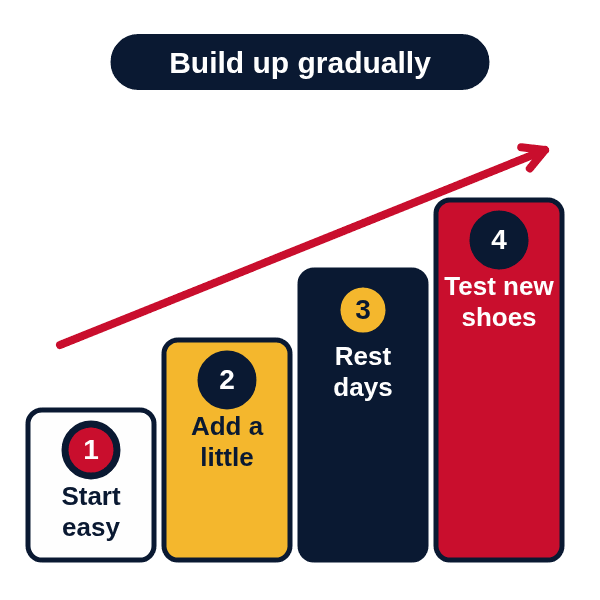
- Start easy. Mix running with walking if needed. Being able to chat while moving is a good sign.
- Add gradually. Increase time or distance a little at a time rather than jumping up quickly.
- Take rest days. Rest is part of training, and the body adapts during recovery.
- Try other activities. Playing other sports, biking or swimming builds fitness and keeps running fun.
- Try shoes before race day. Wear new shoes on a few easy runs first, and choose a pair that feels comfortable from the start.
Our equipment checklist covers what to buy and what can wait.
The first practice
- Arrive a little early with water, running shoes and weather-appropriate clothes.
- Bring any forms the team requires, and tell the coach about medical needs such as asthma or allergies.
- Expect a warm-up, some easy running in groups, and simple drills or stretching.
- Remind your child that every runner started as a beginner, and that nobody is expected to keep up with the fastest athletes on day one.
Practice length, location and schedule vary, so follow your team's information.
Race-day routine
- The night before: pack the meet bag, lay out the uniform, and get a regular night of sleep.
- Eating: choose familiar foods and avoid trying something new on race morning. Ask your coach or doctor if you have questions about food.
- Arrive early: leave extra time for parking, check-in and finding the team's tent.
- Warm up: follow the coach's plan, usually easy jogging and some drills.
- Line up on time: teams are called to the start box before the race.
- After the finish: keep walking through the chute, drink water, put on warm layers and have a snack.
Pacing and mindset
New runners often start too fast because the crowd at the start is exciting. Coaches commonly encourage a controlled start, steady effort through the middle and a stronger finish. Remind your child that running a smart race is a skill that takes practice. Set small goals, such as running the whole way, passing one runner or beating last week's time on the same course. See cross country rules for beginners for how places and team scores come together.
Healthy habits
- Drink water through the day, not just at practice.
- Get regular sleep, since growing athletes need rest.
- Always warm up and cool down.
- Wear the right shoes for the surface and replace worn pairs.
- Take extra care on uneven ground and in hot or cold weather, and follow coach instructions about conditions, including heat and air quality.
- Tell a coach or adult right away if your child feels dizzy, faint or unwell during a run.
A note on aches and pains. Some muscle tiredness is normal for new runners. Pain that is sharp, gets worse, changes how your child runs or lasts should be looked at. Ask your coach or doctor rather than pushing through. This guide is general information and is not medical advice.
For coaches and team parents
- Group runners by comfort and let everyone finish proud.
- Keep most running easy and add harder efforts gradually.
- Share schedules, uniform details and weather plans early.
- Welcome volunteers to help with timing, water and course marshaling.
Look up unfamiliar words in cross country terms for new parents, and see all our guides on the cross country hub.
The rhythm of a season
Most seasons build in stages. Early on, practices focus on getting comfortable with regular running and learning team routines. As the season goes on, workouts may include more variety, and meets become part of the weekly schedule. Toward the end, many teams ease back slightly so runners feel fresh for the biggest races. Every coach plans this a little differently, so follow your team's schedule and ask when you are unsure. Remember that progress is rarely a straight line. Some weeks feel great and others feel heavy, and both are completely normal for growing athletes.
The two weeks before the first meet
- Confirm the meet date, start time, location and arrival time, and put them in your calendar.
- Check that uniform pieces fit and that any required forms or physical paperwork are turned in.
- Wear race shoes on easy runs so they feel familiar.
- Keep sleep and meals regular, and avoid trying new foods or gear right before the race.
- Talk with your child about goals that are not about place, such as finishing strong or staying relaxed at the start.
What a beginner week may look like
Every team is different, but a gentle week often has a few easy runs, at least one or two rest or cross-training days, and one slightly longer easy run. Harder efforts, such as a tempo run or intervals, are usually added slowly by the coach. Follow your team's plan, and ask your coach before adding extra running of your own.
Common mistakes
- Doing too much too soon, such as a big jump in running right before the season.
- Skipping rest days because a child feels fine.
- Comparing a child to faster teammates instead of to their own last race.
- Ignoring small aches until they become bigger problems.
To learn how a race is paced, see how to pace a cross country race for beginners, and if nerves are an issue, read how to handle cross country race nerves.
In BlackForge Sports: one app for every sport your family plays, with live scores, highlights that make themselves and parent-controlled profiles. Get early access and tell us you’re here for cross country. Get early access →
Sources and further reading
- This must be the place: 'To give anything less than your best is to sacrifice the gift' Smoky Mountain News
- Preventing Overuse Injuries in Young Athletes: AAP Policy Explained HealthyChildren.org (American Academy of Pediatrics)
- Sports & Wellness: Running KidsHealth (Nemours)
- Structuring the 14-Workout Week in High School Cross Country NFHS
Links open in a new tab. Quotations are short excerpts, included with attribution for commentary. BlackForge Sports is not affiliated with or endorsed by the people or organizations named.
Frequently asked questions
When should a beginner start training?
A few weeks of easy, regular running before the season is a good start, but ask your coach about the team's plan.
Should kids run through pain?
No. Sharp, worsening or lasting pain should be checked by a coach or doctor instead of being pushed through.
What should a runner eat before a race?
Stick with familiar foods and avoid trying anything new on race day. Ask your coach or doctor if you have specific questions.
How can a parent help most?
Be positive, get your child to meets on time with the right gear, and celebrate effort and personal progress.
How many days a week should a beginner run?
It varies with age, experience and the team's plan. Many beginner schedules include rest days, so ask your coach or doctor what is right for your child.