

Track & field guide
Youth track and field equipment checklist
You do not need much to start track and field, but the right shoes and a well-packed bag make a big difference. Here is a simple checklist, plus what to ask your coach before you buy.
Start simple
Track and field is one of the more affordable sports to begin, and a young beginner does not need everything on the market. In the first season, comfortable clothes and a good pair of running shoes are usually enough. Before buying anything, ask your coach or league what is required, and whether the team provides items like throwing implements, hurdles, or baton sets. If you are still learning how the sport works, read track and field rules for beginners first.
Shoes
Shoes matter more than any other item. Look for a pair that fits well and is meant for running.
- Fit: try shoes on at the end of the day, when feet are a little larger, and wear the socks your child will use. There should be some room for toes, and the heel should stay in place without slipping.
- Trainers: everyday running shoes are fine for practices and are often enough for beginners.
- Spikes: these are lightweight shoes with small metal or plastic pins in the sole for grip on the track. Many beginners do not need them. Some meets restrict spike length or surfaces, so ask your coach before buying a pair.
- Replace as needed: kids outgrow shoes quickly, and worn-out soles can cause trouble, so check them regularly.
Clothing
- Shorts or athletic pants, and a breathable top that lets your child move freely.
- Layers for cool mornings, such as a sweatshirt or warm-up jacket that comes off easily.
- Team uniform pieces, if your club or school requires them. Ask about this ahead of time.
- Comfortable socks that fit well. Sweat-wicking fabrics can help feet stay drier.
- Appropriate undergarments and sports bras where wanted, selected for comfort.
Safety gear and sun protection
Most track events do not require protective gear, but some basic safety items help in any season.
- Sunscreen and a hat for long outdoor meets.
- Sunglasses, if your child finds them comfortable.
- Rain gear and dry clothes to change into after races.
- A mouthguard is not typically required for most track events, but ask your coach if you have questions.
- Pole vault and some other specialty events may have extra safety rules and equipment. These should only be taught by qualified coaches in properly set up areas.
Event-specific items
Most families do not need to buy these items early on. The team or school often provides them, especially for beginners.
- Throwing implements
- Shot puts, discuses, and javelins come in different weights by age group. Do not buy one without asking your coach, because rules vary.
- Starting blocks
- Used by sprinters. They are usually supplied at practices and meets.
- Relay batons
- Provided by the team or meet for races.
- Hurdles
- Provided by the program. Adjustable heights let them be set for different ages.
The meet-day bag
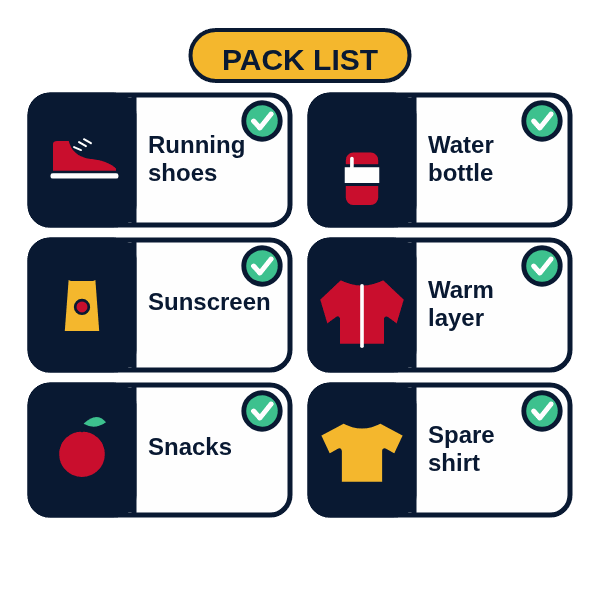
Meets involve long stretches of waiting, so a well-packed bag makes the day easier. A starter checklist:
- Water bottle, refilled throughout the day.
- Healthy snacks that are easy to eat, and a light meal if the meet is long.
- Extra layers and a dry shirt.
- A towel, a blanket, or a folding chair for waiting between events.
- Sunscreen and a hat.
- Any needed medications, such as an inhaler, that your child's doctor has prescribed. Tell the coach about them.
- Spare shoelaces, hair ties, and safety pins for numbers or bibs.
- A fully charged phone, a book, or cards to pass the time.
Taking care of gear
Label everything with your child's name, since lots of identical gear ends up in the same place. Let shoes dry out after wet days, and wash clothing regularly. For more help preparing, see how to prepare for track and field season, and for words you will hear at meets, read track and field terms for new parents. Our track and field hub collects the rest.
Saving money
- Ask the team about loaner or secondhand items, and swap with other families.
- Buy running shoes first and wait on spikes until a coach recommends them. The spikes vs running shoes guide explains the difference.
- Choose clothing that layers, so one set covers many kinds of weather.
- Skip event equipment until your child has settled on an event and the coach says it is needed.
Common gear mistakes
- Buying shoes too small or too big in the hope of growth. A good fit protects feet.
- Wearing brand-new shoes for the first time on meet day. Break them in during practice.
- Forgetting a change of dry clothes after a rainy or sweaty event.
- Leaving gear unlabeled, so it gets lost in the team pile.
Questions to ask before you buy
- What does the team or school provide?
- Is there a required uniform or color?
- Are spikes allowed, and are there length limits?
- What should my child wear for practice versus a meet?
For the full picture of the day itself, read meet day: what to expect.
At the end of the season
Check what still fits and what needs replacing before the next season. Wash and air out clothing and shoes, and return any borrowed team items. Passing outgrown gear to another family, if your program has a swap, keeps costs down for everyone and helps new athletes start.
Keep shoes away from heat and damp storage, and look at the soles and laces before each season begins.
Quick checklist before the first practice
- Running shoes that fit, with laces in good shape.
- Comfortable clothes for the day's weather, plus a layer.
- A labeled water bottle and a small snack.
- Sunscreen, and a hat for sunny days.
- Any form or permission slip the program has asked for.
In BlackForge Sports: one app for every sport your family plays, with live scores, highlights that make themselves and parent-controlled profiles. Get early access and tell us you’re here for track & field. Get early access →
Sources and further reading
- NFHS - Track & Field Rules National Federation of State High School Associations
- Expert running shoe fit tips Mayo Clinic Health System
- Extreme Heat: Tips to Keep Kids Safe When Temperatures Soar HealthyChildren.org (American Academy of Pediatrics)
Links open in a new tab. Quotations are short excerpts, included with attribution for commentary. BlackForge Sports is not affiliated with or endorsed by the people or organizations named.
Frequently asked questions
Does my child need spikes?
Many beginners do not. Everyday running shoes are often fine, and some meets limit spike types, so ask your coach first.
Should I buy a shot put or javelin?
Usually not. Programs commonly provide them, and weights differ by age group, so check with your coach.
How should running shoes fit?
There should be a little room for the toes and the heel should stay put. Trying them on later in the day can help.
What should go in a meet-day bag?
Water, snacks, extra layers, sunscreen, a hat, something to sit on, and any medications your child needs.
How can I save money on track gear?
Ask about team loaners, buy running shoes first, and wait for the coach to recommend spikes or event equipment.