

Tennis guide
Youth tennis equipment checklist
You do not need much to start tennis, but the right fit matters more than anything. This checklist covers the essentials, a few helpful extras and the safety basics for young players.
The essentials
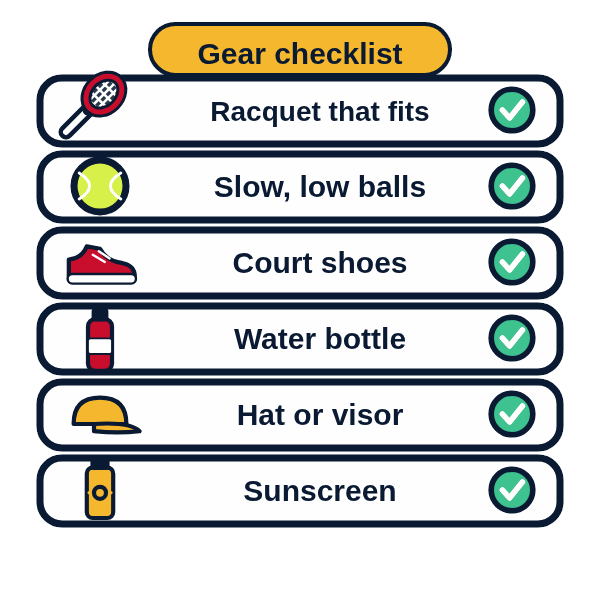
- A racquet that fits. This is the most important item. Racquets for children come in different lengths, and the right one depends on height and strength rather than age alone.
- Tennis balls. Many beginner programs use slower, lower-bouncing balls designed for young players. Ask your coach what the program uses.
- Tennis shoes. Shoes made for tennis support quick side-to-side movement.
- Comfortable athletic clothing. Shorts, skirts, shirts and layers that move freely.
- A water bottle. Bring it to every session.
Choosing a racquet
A racquet that is too long or too heavy makes it hard to swing well and can lead to bad habits. A good fit lets a child swing comfortably and control the racquet head. Tips:
- Ask the coach or a tennis specialty shop to help with sizing. Many programs have loaner racquets for the first few sessions, which is a good way to learn before buying.
- Check that the child can hold the grip comfortably, with the hand wrapped around it and without strain.
- Choose a racquet your child can swing easily, even if it looks smaller than you expected.
- Look over the strings and frame occasionally for damage.
- Kids grow quickly, so recheck the fit each season.
Shoes and clothing
Tennis involves a lot of stopping, starting and sliding. Court shoes have flat, durable soles made for that. Running shoes are built for forward motion and can feel less stable on court. Make sure shoes fit with room for growing toes, are fully laced and are replaced when worn out. Choose breathable clothing, and bring an extra layer for cool mornings. Socks that fit well help prevent blisters.
Sun, heat and hydration
Most tennis is played outdoors, so sun care matters. Helpful items include:
- Sunscreen applied before play and reapplied during long sessions.
- A hat or visor.
- Sunglasses, if your child is comfortable wearing them.
- Plenty of water and a snack for longer sessions.
Take breaks in the shade when you can. If your child feels dizzy, unwell or overheated, stop and tell the coach. For specific health questions, ask a doctor.
Nice-to-have extras
- A racquet bag to keep gear together.
- A small towel and spare overgrip, which is a thin wrap that goes over the handle to improve grip.
- A second racquet once the child plays regularly.
- A labeled water bottle and bag so nothing gets lost.
Caring for gear
A little care helps equipment last through a growth spurt and a season of use. Keep the racquet out of a hot car, since extreme heat is hard on strings and frames. Wipe it down after wet sessions and store it in a bag or cover. Check the grip, and replace or add an overgrip when it feels slick or worn. Replace tennis balls that have gone flat or lost their bounce, and ask the coach before bringing balls to practice, since programs often supply their own and use a specific type for each age. Label everything with your child's name, because water bottles, towels and hats tend to get left behind on the court.
What to borrow, buy and wait on
For the first few sessions, borrowing from the program or a friend is a reasonable way to find out whether your child enjoys tennis. Buy shoes and a well-fitting racquet once your child is committed to the season. Wait on extras like extra racquets or fancy bags until the basics are in place. If you are unsure about any item, the coach is the best person to ask.
Safety basics
- Leave plenty of space between players during drills and swing only when the area is clear.
- Pick up loose balls so no one steps on them.
- Ask the coach whether protective eyewear is recommended for your program or for doubles play, where players are closer together at the net.
- Do not play through pain. Tell the coach or a parent right away.
For help with first-week preparation, see how to prepare for tennis season. If a word on this list is new, check the tennis glossary or the tennis hub.
A quick shopping checklist
- Confirm with the program whether racquets and balls are provided.
- Borrow or rent a racquet for the first sessions if you can.
- Buy court shoes that fit with room to grow.
- Pack water, sunscreen, a hat and a snack.
- Label everything with your child's name.
- Recheck racquet fit and shoe size before each new season.
Common equipment mistakes
- Buying a racquet to grow into. A racquet that is too long or heavy is harder to control and can lead to awkward habits. Fit now matters more than saving money.
- Spending heavily too soon. A beginner rarely needs advanced equipment. Wait until your child has played a season.
- Ignoring worn shoes. Smooth, worn soles slip on court. Replace shoes when they wear out or are outgrown.
- Skipping sun protection. Long outdoor sessions add up, so build the habit early.
Questions to ask the coach
- What racquet length does the coach suggest for my child's height and level?
- Are beginner balls used in class, and who supplies them?
- Is eyewear recommended for doubles or any drills?
Once gear is sorted, the guide to choosing a program or coach can help you find the right class.
Grips, strings and small upkeep
Two small parts affect how a racquet feels. The grip is the handle wrap, and a worn or slippery grip makes the racquet harder to hold, so an overgrip is a cheap fix. The strings can loosen or fray over time. You do not need to learn stringing as a beginner family. If the racquet feels different or a string breaks, ask the coach or a tennis shop what to do. Check the fit again after a growth spurt, since a racquet that was right in spring may feel long by fall.
In BlackForge Sports: one app for every sport your family plays, with live scores, highlights that make themselves and parent-controlled profiles. Get early access and tell us you’re here for tennis. Get early access →
Sources and further reading
- Find the right tennis racquet size USTA
- Tennis Gear Guide: The Essential Equipment for Beginner Players USTA Southern California
- Tennis Safety Tips KidsHealth (Nemours)
Links open in a new tab. Quotations are short excerpts, included with attribution for commentary. BlackForge Sports is not affiliated with or endorsed by the people or organizations named.
Frequently asked questions
What size racquet does my child need?
It depends on height and strength, not just age. Ask the coach or a tennis shop to help you size it.
Can my child use running shoes for tennis?
They can work for a first session, but court shoes are made for side-to-side movement and are a better long-term choice.
Should I buy a racquet before the first class?
Many programs offer loaner racquets. Ask first, and buy once your child knows they enjoy the sport.
Does my child need special balls?
Beginner programs often use slower, lower-bouncing balls. Your coach will tell you what the program uses.
How often should we replace tennis balls?
Balls go flat and lose bounce with use. If a ball no longer bounces lively, ask your coach whether it is time for new ones.