

Tennis guide
How to prepare for tennis season
A little planning makes the start of tennis season smoother for kids and parents. Here is what to do before the first practice, what to bring on match day and how to build healthy habits.
“"Effortless" is a myth.”
Before the season starts
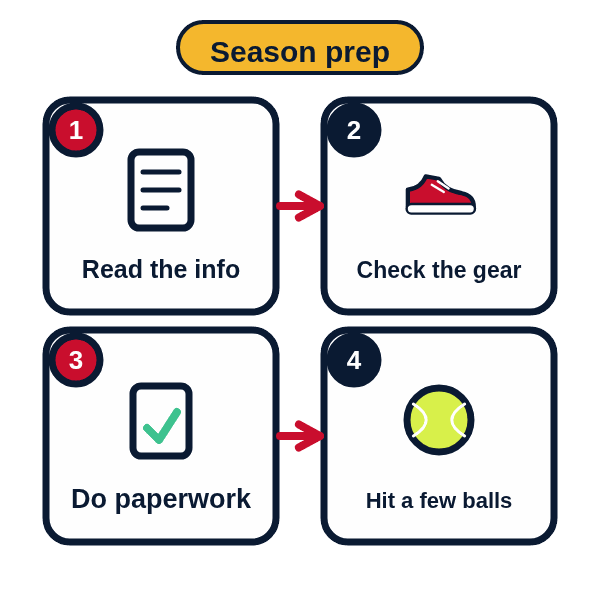
- Read the program information. Check schedules, locations, what to bring and how the program communicates changes.
- Check the gear. Make sure the racquet still fits, shoes are not outgrown and the bag has what it needs. Our equipment checklist can help.
- Get the paperwork done. Registration, waivers and any required forms are easier to handle early.
- Ask about a physical. Some programs ask for one. If you have questions about your child's health, ask a doctor.
- Play a little. Hitting a ball against a wall or tossing and catching with a family member builds comfort.
The first practice
First sessions are mostly about meeting the coach, learning the basic strokes and having fun. Arrive a few minutes early so your child can settle in. Pack water, sunscreen and a snack. Let the coach lead, and avoid coaching from the sidelines, since mixed instructions can confuse young players. Afterward, ask what they enjoyed rather than how they performed.
Match-day routine
- Pack the night before. Racquet, balls if requested, water, snack, towel, hat and an extra shirt.
- Eat a normal meal a good while before play, and avoid trying new foods on match day.
- Arrive early. Check in and find your court.
- Warm up. Light jogging, arm swings and a few easy rallies get the body ready.
- Stay hydrated between games and during changeovers, the short breaks when players switch sides.
- Cool down and refuel afterward, and shake hands with the opponent.
What parents can do on the sidelines
- Cheer good effort for both players, not only points won.
- Stay quiet during points and never call lines or question calls for your child.
- Let your child handle score disputes with guidance from the coach.
- Treat a loss as part of learning. Tennis is often an individual sport, so a loss can feel personal to a young player, even though many programs also have team events.
If matches are new, review the rules and scoring together at home.
Healthy habits and injury prevention
These are general tips and not medical advice. Ask a coach or doctor about anything specific to your child.
- Warm up before play and stretch gently afterward.
- Rest days matter. Kids who play year-round may benefit from time off, so ask a coach or doctor about what is right for yours.
- Drink water through the day, especially in warm weather.
- Wear well-fitting shoes and replace them when worn.
- Tell an adult about pain, rather than playing through it.
Talking with the coach
A short conversation early in the season prevents many problems later. Ask the coach how they will communicate schedule changes, what the weather policy is, and what they hope new players will learn first. Let them know about anything that could affect your child, such as allergies, past injuries or nervousness around other kids, so the coach can plan with you. If your child needs to miss a session, tell the coach ahead of time when possible. Keep your questions focused on your own child's experience, and save bigger concerns for a private moment rather than during a lesson.
Planning the week
Tennis often involves different courts and different times, so a simple routine helps. Put practices and matches on the family calendar, plan transportation in advance and keep a bag packed by the door. Build in time for homework and rest, because tired players have a harder time focusing and enjoying the game. Weather can cancel outdoor play, so check how your program shares updates and what the backup plan is.
Keeping it fun
Most young players stay with tennis when it feels enjoyable and they feel safe trying new things. Encourage hitting with friends, trying both singles and doubles, and celebrating progress at any pace. Unfamiliar words will come up, so keep the glossary handy. You can browse everything in one place on the tennis hub.
A simple checklist for the week before
- Confirm schedule, location and start time.
- Test the racquet and check shoe fit.
- Pack a bag with water, sunscreen, a hat, a snack and a towel.
- Practice saying the score out loud. The scoring guide makes a good quick read.
- Talk with your child about goals that are not about winning, such as trying a new serve.
Looking ahead to matches
When your child is ready for matches, preparation changes a little. Read the event information carefully, learn the format and plan for a day with waiting time. Our guide to a first youth tennis tournament walks through what to expect, and the mental game guide helps with nerves.
Common preparation mistakes
- Waiting until the last minute to check that gear still fits.
- Over-scheduling, so a child has no rest or free time.
- Focusing on results in the first weeks rather than enjoyment and basic skills.
- Skipping a warm-up because the group is running late.
A simple pre-play warm-up
Coaches often lead a warm-up, but a short routine at home helps too. These are general ideas, so ask a coach for a plan that suits your child.
- Easy jogging or brisk walking for a few minutes to raise body temperature.
- Arm circles and gentle torso twists to loosen the shoulders and trunk.
- Side steps and small hops to practice quick footwork.
- Gentle shadow swings, then easy hitting before any hard swings.
Making it work for the whole family
Tennis sessions can fall on school nights, and siblings may have their own activities. Share the schedule early, decide who drives, and pack snacks for waiting time. If your child has two sports in one season, tell both coaches so conflicts are handled in advance. Keep conversations after practice light. A simple question such as what was the best part of today usually works better than a review of every mistake. If a child seems worn out, talk with the coach or a doctor rather than pushing on.
Setting season goals together
Goals work best when they are small and in the child's control. Examples are getting the first serve in more often, keeping a rally going for a set number of hits or learning to say the score clearly. Check in once or twice during the season and adjust. Goals that focus on effort and learning keep the sport fun, even after a tough match.
In BlackForge Sports: one app for every sport your family plays, with live scores, highlights that make themselves and parent-controlled profiles. Get early access and tell us you’re here for tennis. Get early access →
Sources and further reading
- 2024 Commencement Address by Roger Federer Dartmouth
- Tips to Prevent Sports Injuries in Children & Teens HealthyChildren.org (AAP)
- Preventing Overuse Injuries in Young Athletes: AAP Policy Explained HealthyChildren.org (AAP)
- Start Playing Junior Tennis USTA
Links open in a new tab. Quotations are short excerpts, included with attribution for commentary. BlackForge Sports is not affiliated with or endorsed by the people or organizations named.
Frequently asked questions
What should my child bring to the first tennis practice?
A racquet that fits, tennis or court shoes, a water bottle, sunscreen and a snack. Ask the program if they provide loaner racquets or balls.
How early should we arrive on match day?
Arriving early lets your child check in, find the court and warm up calmly. Your program can tell you the best timing.
Should parents coach from the sidelines?
It is usually best to cheer and leave coaching to the coach, since different instructions can confuse young players.
How can we reduce the chance of injury?
Warm up, wear fitting shoes, stay hydrated, take rest days and tell an adult about pain. For specific concerns, ask a coach or doctor.
What if my child is nervous about starting tennis?
That is normal. Visit the courts ahead of time, meet the coach and keep the first weeks low pressure. Our mental game guide has more ideas.