


Golf guide
How to choose a junior golf program
Finding the right first golf program can feel overwhelming. This guide compares the common ways kids start, helps you set a goal, and gives you a list of practical questions to ask before you sign up.
The main ways kids start golf
Families usually find youth golf through one of a few routes, and each has its own feel. Names and structures differ from place to place, so ask each one what it offers.
| Option | What it usually looks like |
|---|---|
| Group lessons or clinics | A coach teaches several beginners together, often at a course or range. A low-pressure way to try the sport. |
| Camps | Short blocks, often during school breaks, mixing instruction, games and time on the course. |
| Junior programs | Run by a course, club or organization, with regular practices and often casual rounds for kids. |
| School teams | Available in some schools, usually for older students, with practices and matches against other schools. |
| Private lessons | One-on-one coaching. Useful for tailored help, though not needed to begin. |
Not every option exists everywhere, and ages and skill levels served vary by program.
Decide what you want first
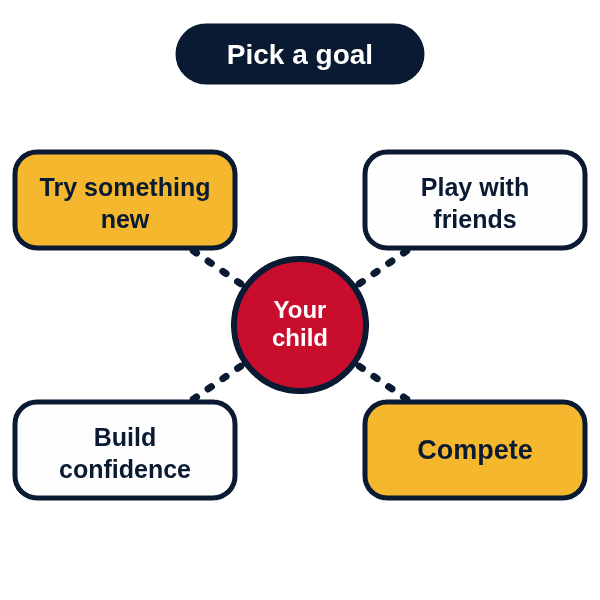
Before comparing programs, talk as a family about the goal. Is it to try something new, to play with friends, to build confidence outdoors, or to compete? A child who just wants to enjoy the game needs something different from one who wants regular tournaments. Honest answers make the choices much easier, and goals can change as your child grows.
Questions to ask any program
About coaching
- Who teaches, and how do they work with beginners?
- Are coaches certified or background-checked, and what safety training do they have? Ask what the program requires.
- How many players does each coach usually work with?
About the structure
- What ages and skill levels are grouped together?
- How long are sessions, how many are there, and where do they take place?
- Do players spend time on the course, or mostly at a range?
- Is there a path from beginner sessions to casual rounds to events?
About equipment and cost
- Are clubs provided or loaned for beginners?
- What gear and clothing should we bring, and is there a dress code?
- What fees are involved, and what do they cover? Ask about extras such as course access or tournament entries.
About the culture
- How does the program teach etiquette and sportsmanship? See golf etiquette for kids and parents.
- How do they handle weather, lightning and canceled sessions?
- What is the role of parents? Can we watch, walk along or volunteer?
- How does the program communicate schedules and changes?
Comparing two programs side by side
If you are torn between two options, write the same questions down for both and compare the answers. Look at coach style, group size, time of day, distance from home and what the fees cover, then add a note about how your child reacted. A simple table on a sheet of paper is enough. Resist the urge to pick on one factor alone, because a closer, friendlier program your child attends happily often beats a bigger name that is hard to reach.
Reasonable goals for a first season
- Learn a safe, comfortable setup and swing under a coach's eye.
- Get used to the course, the language and the customs of the game.
- Play a few holes or a scramble with other children.
- Decide whether your child wants to keep going, without pressure.
Scores and tournaments can come later. For now the aim is that your child leaves each session wanting to return.
Visit and try before you commit
If you can, watch a session or take a trial class. Notice whether children look engaged, whether the coach is patient, whether safety rules are enforced, and whether your child smiles. A friendly, well-organized program often matters more than a famous name or a fancy facility. Trying a single clinic or camp before committing to a full season is a sensible approach.
Think about fit
- Your child's personality: some children thrive in a group, others prefer quiet one-on-one time.
- Schedule and travel: a program that is easy to reach is more likely to stick.
- Time of year: many places play outdoors, so ask about seasonality and any indoor options.
- Family budget: compare what is included, and ask whether the program has equipment loans or assistance. Do not feel you must buy everything at once.
Ask your child, too
A child who chooses the program is more likely to enjoy it. After a visit or trial, ask simple questions. Did you have fun? Did the coach explain things clearly? Would you want to go again? Their answers tell you more than a brochure can.
Trial day checklist
- Is the coach friendly, patient and clear with beginners?
- Are safety rules for swinging and spacing obvious and followed?
- Are the activities active, with little waiting around?
- Are there loaner clubs, or do we need to buy first?
- Did my child ask to come back?
Myths and facts about starting golf
- Myth: You need expensive clubs. Fact: Loaner or modest junior clubs are enough to begin, as the equipment checklist explains.
- Myth: Your family needs to know golf already. Fact: Programs expect complete beginners, and a glossary covers the vocabulary.
- Myth: Kids must play 18 holes. Fact: Many programs start with fewer holes, shorter courses or just a range.
When to move up
If your child keeps asking to play, wants to practice between sessions and enjoys rounds with others, it may be time to ask about longer sessions, regular junior rounds or private lessons. If interest fades, that is fine too. A positive first experience makes it easy to return later.
Signs a program may not be the right fit
Be cautious if safety is treated casually, if the program pushes expensive purchases right away, if children seem anxious or pressured, or if the answers to your questions are vague. Trust your instincts and your child's reactions.
Next steps
Once you have chosen a program, start with the season preparation guide, and learn the basics together in golf rules for beginners. The golf hub page collects every guide in one place.
In BlackForge Sports: one app for every sport your family plays, with live scores, highlights that make themselves and parent-controlled profiles. Get early access and tell us you’re here for golf. Get early access →
Sources and further reading
- PGA Jr. League PGA of America (Carolinas PGA)
- 2025 Annual Review The First Tee
- TGA Premier Sports TGA Premier Sports
- A Parent's Guide: How to Start Playing Youth Golf PGA of America
Links open in a new tab. Quotations are short excerpts, included with attribution for commentary. BlackForge Sports is not affiliated with or endorsed by the people or organizations named.
Frequently asked questions
What is the best way for a child to start golf?
A beginner group lesson, clinic or camp is a low-pressure way to try it. The best option depends on your child, your schedule and what is offered nearby.
Do we need private lessons to begin?
No. Group programs are a common starting point, and private lessons can be added later if your child wants more individual attention.
What should I ask a junior golf program?
Ask about coaching, group size, ages, equipment loans, costs, safety, weather policies and how parents are involved.
Should we try before committing?
If possible, yes. Watching a session or taking a trial class shows you how the coach and the setting feel for your child.
How old does a child need to be to start golf?
It varies by program. Some offer sessions for very young children and others start later, so ask what ages each program serves.