

Hockey guide
Hockey goalie guide for parents
Goalie is the most unusual position in hockey, with its own skills, gear and mindset. This guide helps parents understand the role and decide how to try it.
What a goalie really does
The goalie is the last line of defense and the only player on the ice with a special set of rules and gear. A goalie stops shots, covers loose pucks, directs teammates and often sees the whole game from one spot. Many kids are drawn to the position by the equipment, the focus and the feeling of making a big save. Others are asked to try it by a coach. Either way, parents have extra questions about goalies, and this guide answers them. For the other positions, see hockey positions explained.
Skills a goalie works on
- Skating: goalies move side to side, forward and backward in small, controlled steps. They need good balance and strong edges, so skating practice matters here too.
- Positioning: standing in the right place relative to the puck and net often matters more than a flashy save.
- Tracking the puck: keeping eyes on the puck through traffic.
- Rebound control: steering or covering the puck after a save so the other team does not get a second chance.
- Puck handling: stopping the puck behind the net and passing it to a teammate.
- Communication: calling out where opponents are so defensemen can react.
The mental side
Goalie is a position where mistakes are very visible. A goal against can feel personal, even though hockey goals usually come from several plays working together. Children who thrive in net are often those who can reset quickly after a goal and focus on the next shot. Parents can help by celebrating good effort, asking your child what they learned and never blaming a goalie for a loss. Let the coach talk about technique, and keep the car ride home positive.
Trying goalie for the first time
- Talk with your child and the coach. Make sure your child actually wants to try it, rather than feeling pushed.
- Ask about loaner gear. Many clubs and leagues lend goalie equipment, which means you can try it before buying anything.
- Look for a goalie session or clinic. Some programs offer a practice just for goalies, which is a gentle way to start.
- Be patient. Goalies often take longer to feel comfortable than skaters. Give it a full trial period before deciding.
- Keep an open door. Playing goalie does not mean your child can never play out again, and many players switch back and forth when they are young.
Goalie gear
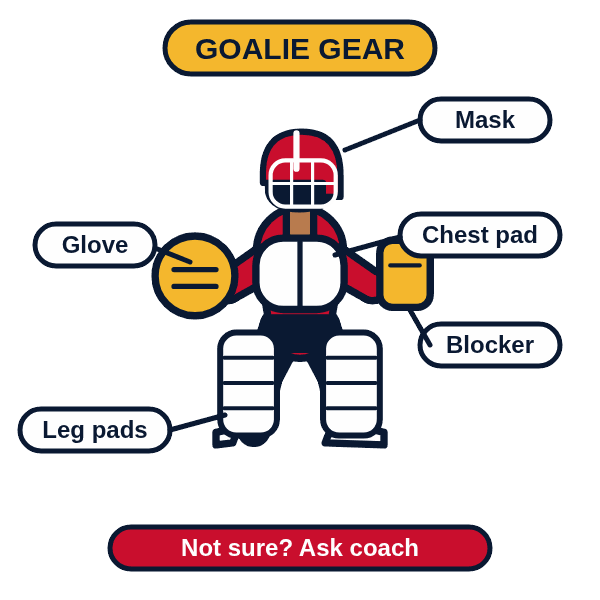
Goalie equipment is different from what skaters wear. The standard set includes a goalie mask, a chest protector, leg pads, a blocker on one hand, a catching glove on the other, goalie pants and goalie skates. A throat protector is part of most masks or worn with them, and many leagues require one. Fit is critical because goalies slide, drop and stretch, and loose pads can leave gaps. If you do buy gear, ask a coach or a trained fitter, and never skip a piece to save money. Our youth hockey equipment checklist covers general fit tips for everything else. Sizing by age and size varies by brand and league, so this is a good place to lean on an expert.
Safety and care
Goalies take shots, so protective gear should always be in good shape. Check straps and buckles, replace damaged pieces and air out the whole bag after each session. This is general information and not medical advice. If your child complains of pain, dizziness or anything that worries you after a hit or a fall, tell the coach and ask a doctor.
Tips for goalie parents
- Plan for extra time at the rink because dressing a goalie takes longer.
- Label every piece of equipment with your child's name.
- Stay calm when pucks get through. Your child is already watching your reaction.
- Share the load with other goalie families if you can, such as rides and equipment tips.
- Remember that goalies see lots of shots in some games and few in others, and neither says anything about a child's worth.
When you are ready for the season ahead, read how to prepare for hockey season.
Looking at the whole season
A goalie's first season is about comfort, not results. Expect some tough games, some great saves and a lot of learning. Check in with your child now and then about whether they are enjoying it, and keep the conversation open. If they want to stop, or try something else, that is a normal part of growing up in sports.
Questions to ask the coach about goalies
- Does the team have loaner gear, and who is responsible for cleaning and returning it?
- How are goalies chosen and rotated at this age?
- Is there goalie coaching, a goalie clinic or a goalie-only practice?
- What are the rules about which gear is mandatory, such as a throat protector?
Myths about goalies
- Myth: Goalies must be the best skaters. Fact: Skating helps a lot, but goalies also need balance, focus and a calm attitude.
- Myth: A goalie who lets in goals is not good enough. Fact: Goals come from many factors, including shot quality and team play, so one number says little about a young goalie.
- Myth: Starting as goalie means giving up other positions. Fact: Many young players try both.
Helping at home
Parents do not need to fire pucks at their child. Simple activities such as catching tennis balls, balance work and quick-reaction games can build coordination, and a coach can recommend safe options. Always make sure any home practice is supervised and uses age-appropriate, protective gear where needed. For general ideas, see hockey skills to practice at home.
In BlackForge Sports: one app for every sport your family plays, with live scores, highlights that make themselves and parent-controlled profiles. Get early access and tell us you’re here for hockey. Get early access →
Sources and further reading
- USA Hockey Launches Major Goaltending Initiative USA Hockey
- Stop treating goalies as if they're 'different' ADM Kids (USA Hockey)
- Ice Hockey HealthyChildren.org (American Academy of Pediatrics)
Links open in a new tab. Quotations are short excerpts, included with attribution for commentary. BlackForge Sports is not affiliated with or endorsed by the people or organizations named.
Frequently asked questions
What does a hockey goalie do?
A goalie stops shots, covers loose pucks, handles the puck behind the net and helps direct teammates. They are the last line of defense.
Should I buy goalie gear before my child tries the position?
Ask the coach first. Many clubs and leagues lend goalie equipment so you can try it without buying anything.
How can I help a goalie who is upset after a goal?
Stay calm and focus on effort and what they learned. Goals usually come from several plays, so avoid blaming the goalie.
Can a goalie switch back to playing out?
Yes, in most youth programs. Many young players try different positions before settling on one.
How do I find out if my child should try goalie?
Ask your child first, then talk with the coach about loaner gear and a trial. A goalie clinic can help your child decide.